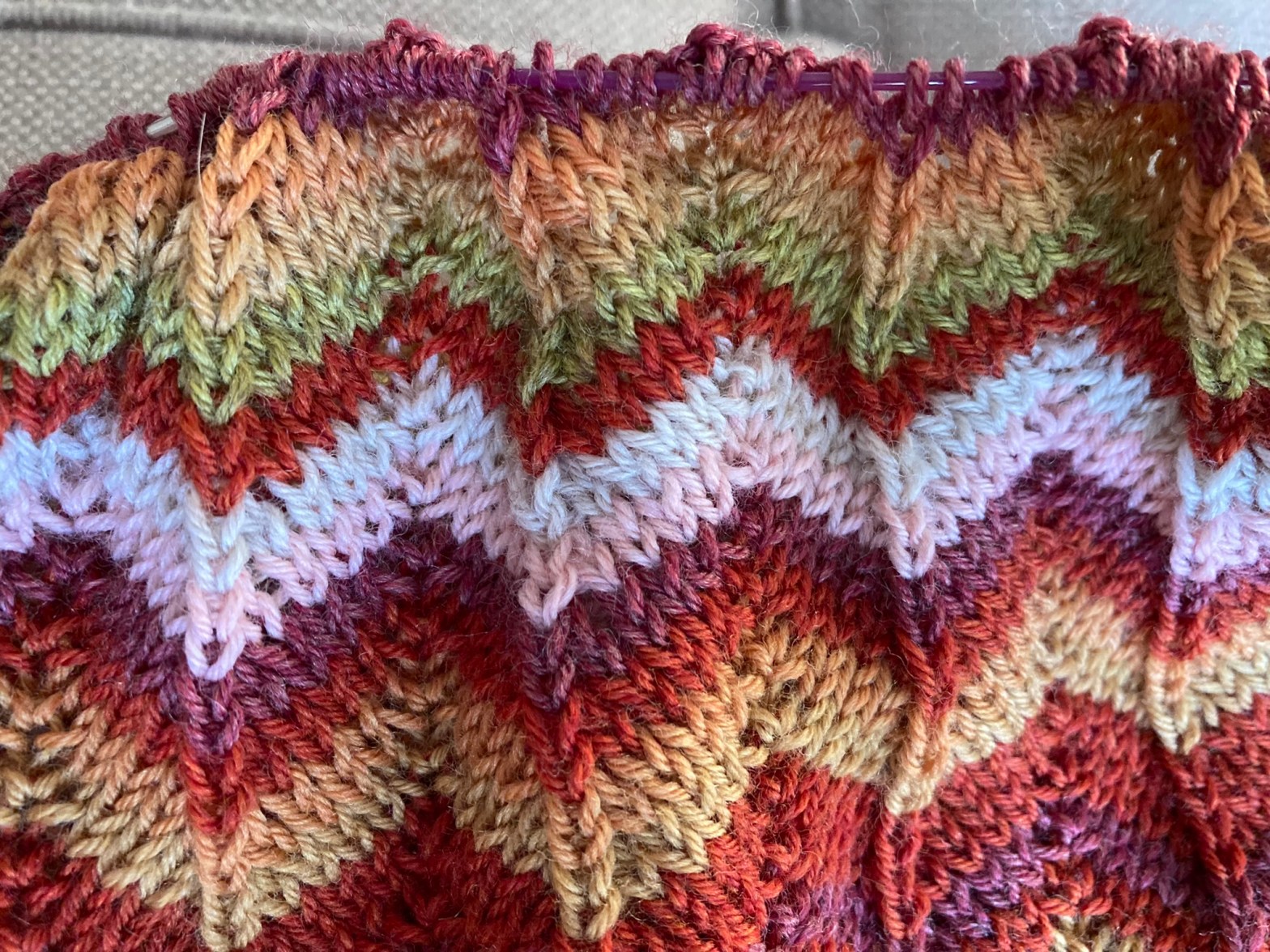
I hadn’t previously thought to record my temperature records here but although I had intended this blog to be about my chemistry-related work, daily temperature records fit rather well with the ‘periodically’ title.
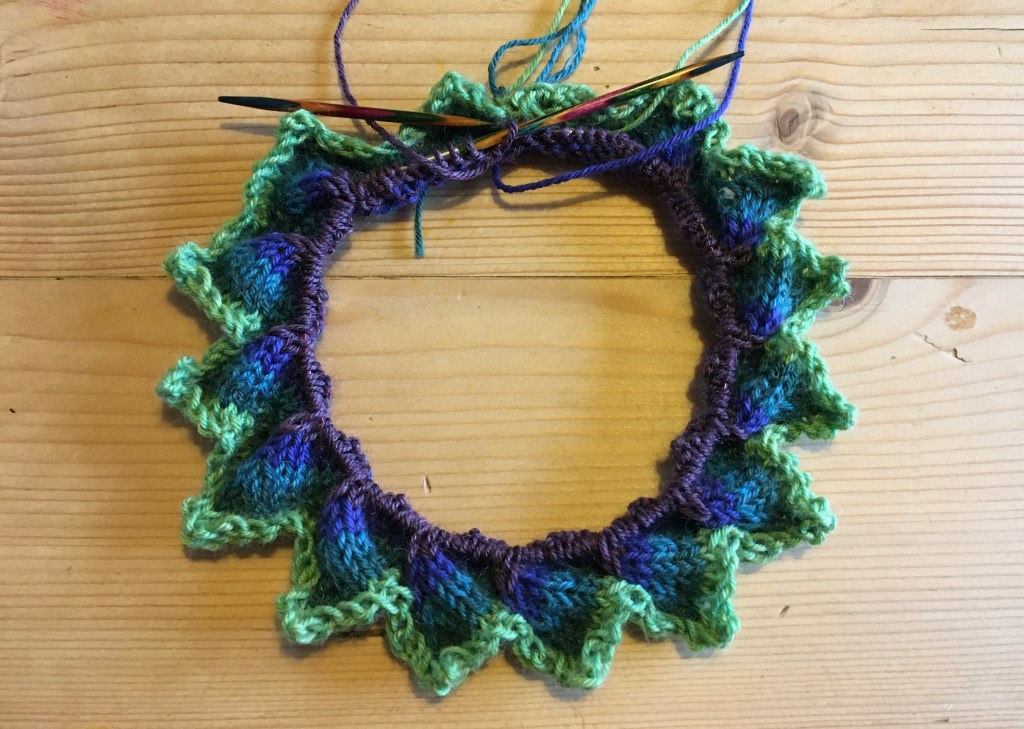
So here goes… back before the start of 2022 I spotted on social media that recording daily temperature data had become a thing amongst knitters and crocheters and I rather liked the idea. I planned out my scarf, got myself a garden temperature sensor, and set about it. I had great fun and became pretty obsessed with the temperature – especially when it carried on rising through the night, or declined throughout the 24-hour period, or when there was a sudden drop when a storm came in.
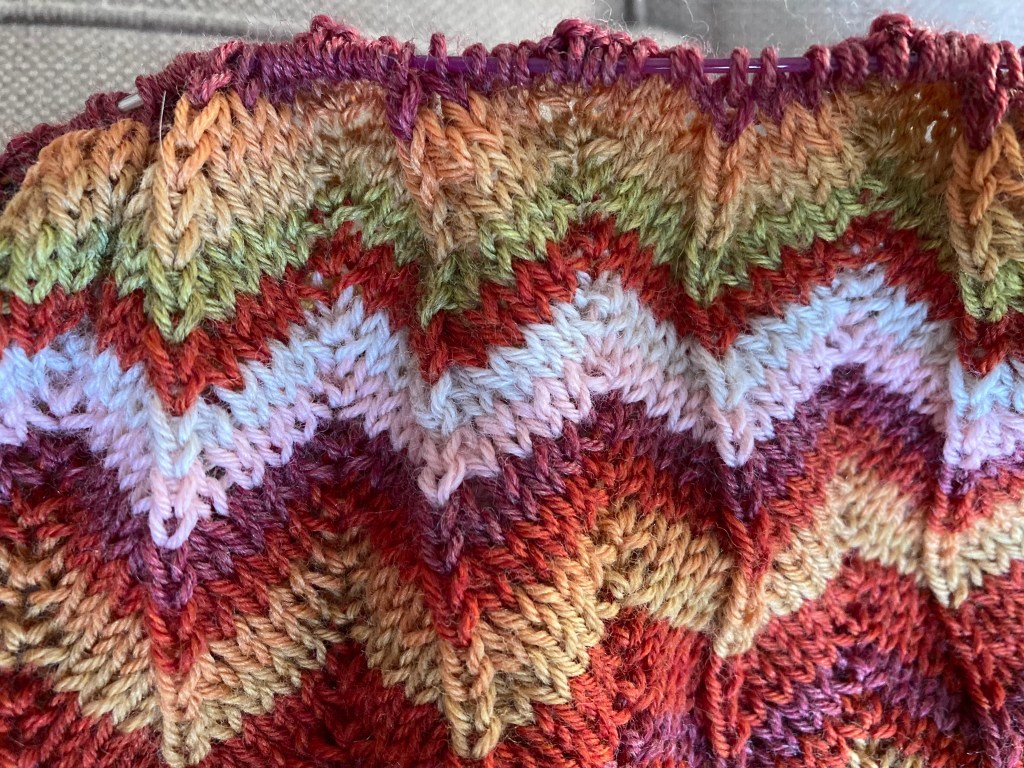
Towards the middle of the year I realised it was quite a momentous time to be doing it. I had planned for temperatures up to 33 °C, with a deep red colour, but the forecasts were going up to 34°C then 35°, then 36°. I ordered a new shade of yarn in mid-pink and by the time it arrived, the forecasts had gone up to a staggering 40 °C. I hastily ordered two more taking me through a pale pick up to white-hot. I even knitted on that 40° day, with a wet flannel on my head! I finally got to use the 36°C colour when we had another baking hot day the following month.
I worried that I would never get to use my sub-zero lilac but then we had a cold-snap in December when the temperature didn’t go above zero for several days.
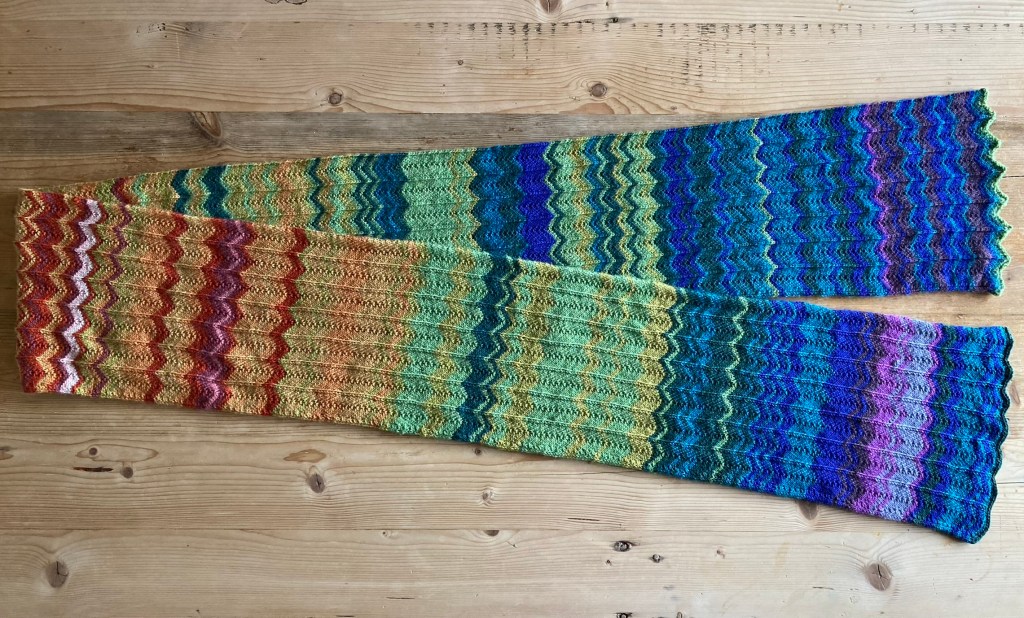
I finished on December 31st, once it was clear we had gone past the temperature high for that day, and have a lovely thick warm double-rainbowish scarf to show for it. It was a fascinating project but I realised that to really be meaningful I should track temperature year on year, and for that, see my next post…
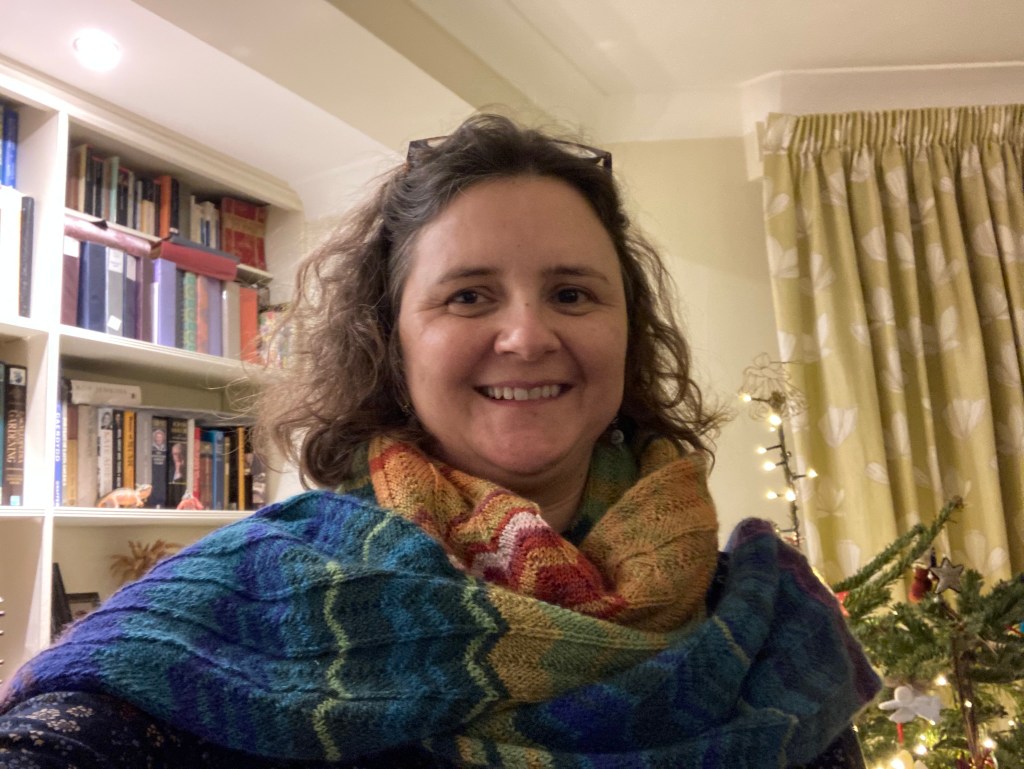
Some technical details… many of the scarves I saw online looked impossibly long to wear so I went for a sock yarn. Even so, it is very long so a laceweight might do the job nicely. I went for Socks Yeah! by Coop Knits as I loved the colours and particularly that they were called after minerals (azurite, citrine, amethyst etc.) Each colour represents a three-degree range, meaning that I had 11 colours in my rainbow range (from violet to red), with a lilac below that and two pinks and a white above, covering the range from -2 to +40°C. I knitted in the round, with one pattern and one plain row each day, and simply stitched across the ends of the tube once I’d cast off. There are several advantages to this: you can use a pattern that is not double-sided as the reverse is hidden inside the tube; the ends are also hidden inside the tube so you can simply tie them off rather than sewing them in; it’s double thickness which still gives a good warm scarf with finer yarns; the plain row is knit rather than purl so it’s quicker.
 periodically.blog