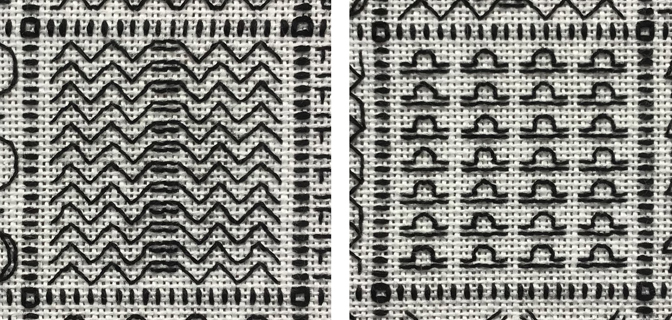
I have previously posted fluorine and chlorine, the two elements at the top of Group VII – the halogens – and astatine near the bottom. Today the two in between: bromine and iodine. These patterns result from their physical properties and give me the rare opportunity to incorporate some organic chemistry. Similarly to fluorine andContinue reading “Properties of halogens”
Author Archives: clareewilkes
For better, for worse
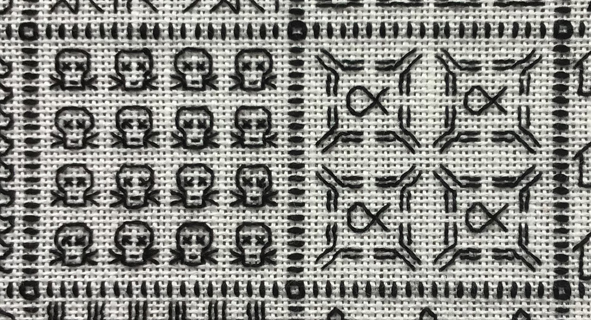
One for the toxicologists and one for the immunologists today: polonium and astatine – the two elements I have struggled with most so far to find something I could work into a design. Both are radioactive – a property that can be harnessed for good or for harm. Astatine (from the Greek astatos meaning unstable)Continue reading “For better, for worse”
Light fantastic
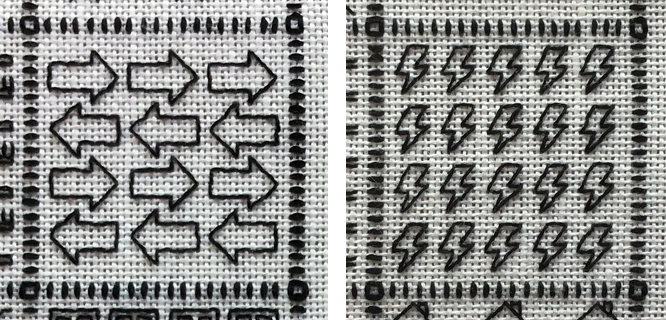
Following on from radon and argon, two more elements in Group 18: neon and xenon, both of which find use in bright and showy lighting. We are all familiar with the bright “neon” lights used in advertising displays and in signage such as exit arrows. Neon lends itself for this purpose as it emits aContinue reading “Light fantastic”
Memory lane
It’s great to see that last month’s review in Chemistry World is prompting happy memories of Brian’s lectures and entertaining conversation – see Dinner and a demonstration from Ian Dale in this month’s Letters: https://www.chemistryworld.com/opinion/letters-august-2020/4012167.article
House and home
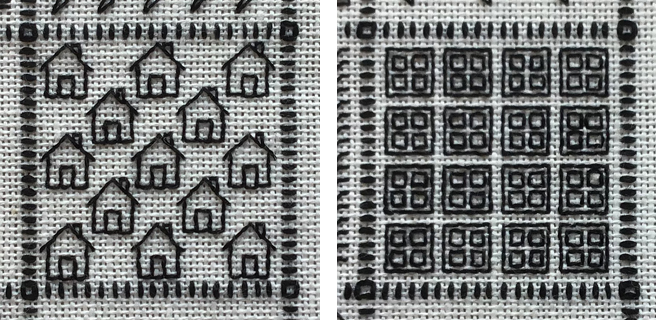
Today, two elements in the last group of the Periodic Table, Group 18: radon and argon. Radon is found towards the bottom of the group; it is a heavy element that is unstable and therefore radioactive. It has a half-life of only 3.5 days so doesn’t hang around for long, but is continually generated fromContinue reading “House and home”
Health and hygiene

Fluorine and chlorine, the two elements at the top of Group 17, are both important for keeping us healthy. The elements themselves are highly reactive toxic gases and if inhaled cause severe lung damage. Several chemists were injured, some fatally, in attempts to isolate elemental fluorine, and chlorine gas was put to devastating use inContinue reading “Health and hygiene”
Progress update
As I have taken the plunge this evening and made this blog live, it seems an appropriate time to give a progress update. As you can see, the p-block is starting to look quite well populated, as is this end of the transition elements. The only two completed elements not visible are iridium and europiumContinue reading “Progress update”
Location, location, location

According to the rules of the international Union of Pure and Applied Chemistry (IUPAC), a new element can be named after a mythological concept or character (including an astronomical object), a mineral or similar substance, a place or geographical region, a property of the element, or a scientist. These three elements, numbers 115, 116 andContinue reading “Location, location, location”
Chemistry World
First posted on FB 05/06/2020 Delighted to be reviewed in Chemistry World, the membership magazine of the Royal Society of Chemistry. To quote Professor Bill Griffith, “an enchanting memoir… a joy to read, clearly written and fully reference with an excellent index.” (Given that I did the indexing myself, I’m pretty chuffed with it beingContinue reading “Chemistry World”
Periodic greetings
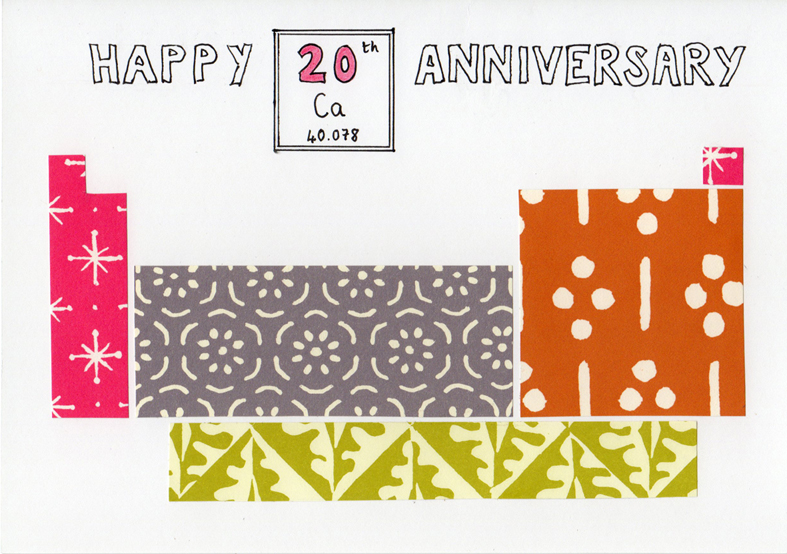
This is one of a series of greetings cards I have made using the letters and numbers of the periodic table. The beautiful papers used here and on my homepage are designed and printed in Cambridge by Cambridge Imprints.
 periodically.blog